
We live in a world where everything has become so hustle and bustle and taking time out to nourish your wellbeing, has become such a foreign concept with people often replacing essential coping mechanisms with medications. It is important to note, medications of any kind are essential, however, they should not be considered the be all and end all. This article explores more the importance of building resilience, for more information on resilience and guidance on how to build resilience, please visit: 10 Ways to Build Resilience (10 Ways to Build Resilience)
Why is it so important to build resilience?
Before we can explore the importance of building resilience, we need to explore what resilience is. Resilience is a term used to describe someone’s ability to bounce back from a setback in life and determines how you manage challenging situations. Therefore, it is important to continuously build on resilience, as this has a direct impact on how you are able to maintain optimism and effectively manage, stress, complex emotions and sudden life changes etc.
What are some barriers to resilience?
Although everyone responds differently to life in general, and there are those who are naturally resilient; this shouldn’t be a deterrent as resilience like every other behaviour, can be learnt! Nonetheless, this does not make it any easier, particularly where, as psychological beings, our psyche’s primary goal is to protect the ego from anything that it may deem harmful, as this can incite a deterioration to your mental health. As a result, your mind instinctively implements defences mechanisms to protect your psyche, these are unconscious and although they support you to continue to manage and cope with daily stressors, they also prevent you from growth as you are not processing your emotions and often deflecting instead!
Defence mechanisms
There are many ways in which defence mechanisms can support you, which can be found here: Defense mechanisms: 8 types and examples. However, the main area I want to focus on, is how these mechanisms prevent you from being your true authentic self.
There are a variety of defence mechanisms, however, the predominate ones are: –
- Denial – where a person struggles to recognise their predicament
- Distortion – where a person avoids a situation by convincing themselves something to be true when it is not
- Projection – where a person accuses someone else of thoughts / emotions they are experiencing
- Disassociation – where a person disconnects from the predicament (acts like its not happening)
- Repression – where a person locks out the predicament and pushes it to their unconscious
- Reaction formation – where a person behaves like everything is ok, as they do not want to feel their circumstances
- Displacement – where a person redirects an emotion from one incident to another unrelated usually smaller incident
- Intellectualisation – where a person rationalises the predicament to justify actions
Defence mechanisms are very powerful tools your mind uses to protect itself, and although these are beneficial for people who have experienced trauma or adverse experiences, they can be equally disadvantageous to growth and wellbeing, as these are unhealthy measures of processing and negating your emotions.
Instant Gratification vs Delayed Gratification
In society, we have become accustomed to instant gratification, where we expect to see instant relief from whatever we are experiencing, whether it is a situation or an emotion. Generally, people do not have time to invest in activities that bring you delayed gratification, and in turn longer lasting results. For more information on instant vs delayed gratification, please visit: Delayed vs Instant Gratification: The Impact on Health & Fitness / Delayed Gratification | Master Impulse Control with These Tips.
Definitions
Instant Gratification
Instant or immediate gratification is defined as “the temptation and resulting tendency to forego a future benefit in order to obtain a less rewarding but more immediate benefit” (What Is Instant Gratification? (Definition & Examples)). This essentially means, you want what you want, and you want it right now! An example of this is hunger, when you are hungry, you need instant relief.
Delayed Gratification
Delayed gratification is defined as “the ability to delay an impulse for an immediate reward to receive a more favourable reward at a later time” (What Is Delayed Gratification? 5 Examples & Definition). This essentially means, you put the work in for the long-term benefits, an example of this is studying / education, you do not see the benefits of school, until after you graduate and join the work force.
Tips and Tricks to building resilience
When it comes to building resilience, the key thing to remember is that it takes time, particularly where you aren’t accustomed to utilising defence mechanisms which predominantly focuses on avoidance rather than sitting with your emotions. This is where delayed gratification plays a big role in change, as the work you do now, will not be evidenced until further down the line, and the rewards gradually build up.
Identifying / Understanding & Managing your emotions

image by Giuseppe Ramos S (canva)
Managing your emotions is a huge part of building resilience and the first thing to understand when it comes to your emotions, is that emotions are not bad, every emotion you experience is valid, and healthy, even the ‘negative’ ones. There is this misconception that negative emotions are bad, and you shouldn’t feel them, and although this is partially true, as you shouldn’t consistently feel negative. Negative emotions aren’t all terrible, it’s all about perception and when used as a guide to happiness, can help you change your relationship with your emotions.
Often when people experience a negative emotion, they immediately shut it down, generally due to how uncomfortable they feel. Although this is a natural response, we want to be in a positive where we unpack these emotions, as it is important for personal growth. Let’s take for example 3 negative emotions, and briefly touch on how these are actually healthy emotions to experience: fear, jealousy, insecurity.
- Fear – fear is an internal alarm system, when you are scared, it is because you perceive there to be a threatening situation. Therefore, when you are in a situation where you feel afraid, start thinking of what the source of the danger is, as this will allow you to rationalise your fear and understand what it is you need to ‘work on’ or ‘fix’ in order for you to feel safe.
- Jealousy – this is the formulation of desire: the next time you feel jealous, stop and think, what is it that they have that I want, and now that you have identified it, you can work towards achieving this for yourself.
- Insecurity – this is a recognition of something you are lacking: the next time you feel insecure, think about what it is that you feel you would like to improve on, whether it is to upskill yourself in a certain trade or changing your behaviours.
Emotions are a part of us, and every emotion teaches us something different, which is why it is so important to learn to sit with our emotions and not avoid them.
It is important to remember that this can be very upsetting, and you can often find yourself in floods of tears: just remember it is all part of the journey! Crying is a process known as evacuation, where you are expelling all your negative emotions and thoughts. When someone cries, it is because they have become overwhelmed with emotions and struggle to communicate how they feel, generally because there is a combination of emotions. Therefore, when you cry, what’s also taking place is you are replaying the scenario and mentally processing and digesting it: so, where you started off unable to understand or verbalise how you feel, you end up with an often understanding of what has upset you, which you can now use to effectively communicate. Therefore, cry as much as you need to; you know you’ve worked through these emotions/predicaments once you are done crying. And only then, can you put in the necessary work, or discussions where applicable. Always remember, the more emotions you process, the easier it is to continue processing and identifying the necessary steps forwards.
Managing conflict / Emotions
Taking a step back is very important for growth and building resilience, particularly where you already struggle to manage your emotions. A healthy self-help technique that enables people to manage their emotions during conflict, is STOPP! This is a generic but very effective CBT technique, that focuses on a combination of mindfulness, breathing exercises and implementing coping mechanisms. The idea of the STOPP method, is to enable people to start taking steps towards being responsive and not reactive.
| S – stop | Immediately take a step back and do not react in any way |
| T – take a deep breath | Be mindful of your breathing (what is the pace)Take deep breathes, and try to slow your breathing down |
| O – observe | Think about how you are feeling physically & emotionally Write down how you are feeling (try not to think just write, this helps you to discover emotions you weren’t aware of) |
| P – pull back | Look back at what you have written Think about how it makes you feel now Think about whether next week or next month you might still feel this way |
| P – practice what works | Implement appropriate coping mechanisms Always be mindful, specific emotions require specific coping mechanisms, therefore identifying the correct emotions are valuable. |
When managing your emotions in this way, often you will find that you feel completely different to how you initially thought you felt. This is largely because you are giving yourself the opportunity to see the situation without being clouded by anger or shock. This also gives you a chance to examine whether you created a larger scenario in your head than in actuality, which is a very common anxiety response. For more information on embracing negative emotions, please visit: How Negative Emotions Affect Us and How to Embrace Them.
Fear

image by sparklestroke (canva)
Fear is a huge deterrent for people to overcome when regard to building resilience, as a large part of building resilience is managing your emotions. People often struggle to sit with their emotions, particularly when your mental health is not in a good place, however what a lot of people do not understand, is sitting with your emotions makes you stronger not weaker. Often, people are afraid to sit with their emotions, as they feel if they go to that dark place, they may never be able to recover, and although it feels like that, that’s just your defence mechanisms. The reality is, you not only overcome these emotions, but you build resilience when it comes to managing this emotion again in the future. An example is: a person struggles with public speaking and manages to overcome this and do it. The next time the person must engage in public speaking, they can remind themselves of the time prior and how it wasn’t as challenging as they initially suspected. I call this, counteracting negative thoughts with positive truths, these in my opinion are more effective than affirmations, in situations like these, as your brain finds it easier to accept something when presented with evidence. Please note, affirmations I consider more delayed gratification and positive truths instant gratification, as one allows you to overcome an immediate challenge, where another enables you to build confidence overtime.
It is very important to understand, sitting with your emotions is not recommended for everyone. In cases where someone is struggling with heightened mental health challenges, psychosis or suicidality, we emphasize that you do not sit with your emotions, as that could provoke impulsivity and often leads to a negative outcome or crisis. If you fall under this category, please liaise with your GP, or refer to our suicide crisis links in the safeguarding section, for information on out of hours services.
Challenging Misconceptions
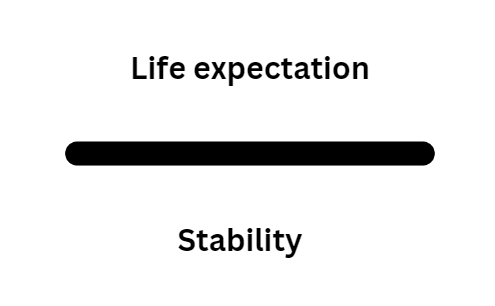
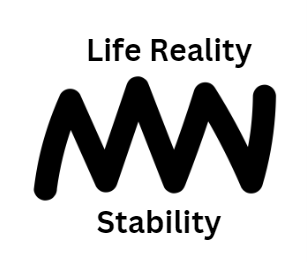
Overtime, largely due to busier lifestyles, people struggle to have to manage with any additional stress in life and want things to just be simple and straight forward. It is crucial to remember, what we want is just an expectation and not reality, as this is where people tend to get confused and set unrealistic expectations in life, to their own detriment. In an ideal world, we would all like to go through life having no negative experiences, only positive ones.
However, this does not enable growth for starters and most importantly, it sets you up to fail, when you do encounter challenges in life, as again, perception plays a big role here. When you set an unrealistic expectation and are met with stressors, you would generally tend to throw a pity party for yourself and see challenges as barriers and not opportunity for growth. When your expectation includes an understanding, that life throws curve balls at you, at any time. This enables you to see stressors as another challenge and/or life lesson, which you can overcome, just like any other.
Looking at my little diagram, what does this remind you of? A pulse?! Always think of it like this, the only people who experience no stressors in life are the dead!
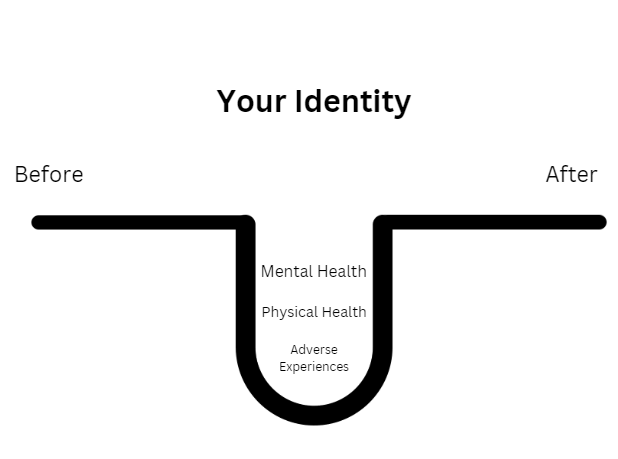
Another area people often misunderstand, is when someone is trying to move on past their experiences, they often try to recapture the person that once was. This is very natural, when you’ve gone through a challenging situation in life, you want to go back to a time when you were happiest and try and recapture that person. The only problem with this is, the person you are trying to recapture does not exist anymore, as that person, did not go through the challenging experiences in your life. As you can see from my diagram, there is no going back once you have gone through these experiences, there is only moving forwards. This does not mean that you cannot be happy again, it does mean, you need to discover who you are now, and reshaping your future can include reintroducing the old you (the parts you loved), to the new you. Nonetheless, the work is about moving forwards, not taking a step back, what is lost is lost and it is lost for a reason, so that you can find something more beautiful!
Conclusion
When it comes to building resilience, it is imperative that you understand, that it is an ongoing piece of work, that starts off as very challenging and overtime, once incorporated into your daily routine, is an effective tool to bouncing back from setbacks in life. A crucial thing to remember is, you are stronger than you realise and sometimes, have to go through these challenges in order to give yourself the opportunity to solidify this strength. Always remember, no matter how scary it is, do not be afraid of yourself, if there is something you don’t like about yourself, you have the power to change it!
I will leave you with my favourite Oscar Wilde quote: “Be yourself, everyone else is already taken!”
Disclaimer – Please note, all advice given is based on various healthcare models that have been proven to support patients with sustainability and backed by Public Health England (PHE). Nonetheless, you should run any changes to your routine by your GP as they are your primary carer, it is also important that any other healthcare professionals involved in your care is involved in your goal planning. Don’t forget they hold your medical records and would be familiar with you; this will help everyone to be on the same page and will also enable you to plan more realistically and not overestimate your capacity!
References
- Defense mechanisms: 8 types and examples
- 10 Ways to Build Resilience
- Delayed vs Instant Gratification: The Impact on Health & Fitness
- Delayed Gratification | Master Impulse Control with These Tips
- What Is Delayed Gratification? 5 Examples & Definition
- What Is Instant Gratification? (Definition & Examples)
- How Negative Emotions Affect Us and How to Embrace Them


25 April 2025, 8:58 am
Very good https://lc.cx/xjXBQT
26 April 2025, 6:04 am
Good https://lc.cx/xjXBQT
29 April 2025, 11:48 pm
Very good https://is.gd/N1ikS2
30 April 2025, 1:27 am
Very good https://is.gd/N1ikS2
30 April 2025, 12:35 pm
Good https://is.gd/N1ikS2
30 April 2025, 9:21 pm
Good https://is.gd/N1ikS2
1 May 2025, 1:47 am
Good https://is.gd/N1ikS2
28 May 2025, 5:22 am
https://shorturl.fm/TbTre
29 May 2025, 3:10 pm
https://shorturl.fm/68Y8V
30 May 2025, 1:19 pm
https://shorturl.fm/m8ueY
11 February 2026, 4:56 am
Can you be more specific about the content of your article? After reading it, I still have some doubts. Hope you can help me. https://www.binance.com/register?ref=IXBIAFVY
4 March 2026, 8:13 pm
Your point of view caught my eye and was very interesting. Thanks. I have a question for you. https://accounts.binance.info/register-person?ref=QCGZMHR6
6 March 2026, 7:25 am
Thanks for sharing. I read many of your blog posts, cool, your blog is very good.