Search Results

Berta Kaguako with number of results 45

Substance-Misuse-Awareness
Impact of Substance Misuse on the family
||
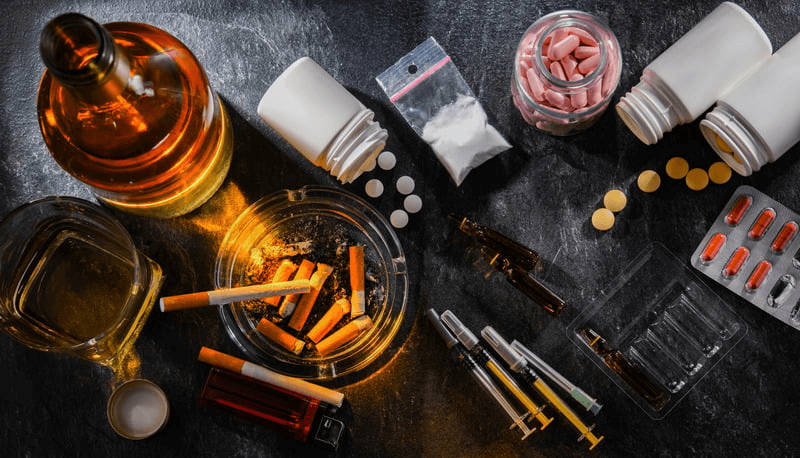
In honor of World Children's day - 20th Nov 2024 Introduction   Substance misuse or substance misuse disorder is exceptionally misunderstood, with often  people not recognising that they could potentially be misusing substances or become reliant  on them: this includes your medications. This piece briefly touches on awareness of excessive  use, to the point of addiction i.e., uncontrolled use. Substances can be misused by anyone and  although there are a variety of contributing factors towards misuse and addiction, there is no  specific gene for addiction, making it challenging to determine who can succumb to it.   A lot of people are unaware that any medications, despite it being prescribed can be misused,  if not used in line with guidance. This should not deter anyone from using their medications  but to simply be mindful of your medications, what are you using it for? And to be mindful of  the early signs of potential misuse?   Parental Substance Misuse   In the UK, there’s been a significant increase over the years, in parental substance misuse,  “The Health Survey for England and General Household Survey have suggested that 22–30%  of children live with a parent who binge drinks or drinks at a hazardous level and  approximately 8% live with a parent who misuses drugs (Duffy, Shaw, Woolfall, & Beynon,  2010; Manning, Best, Faulkner, & Titherington, 2009)”.   It’s also important to note, substance misuse disorder is a mental health condition, and also a  symptom to mental health conditions. What this means is that it generally commences as a  symptom to a mental health condition, where you start to self-medicate for a condition, and  can progress to substance disorder.   Signs of potential misuse include:   Are you building a tolerance?   Are you experiencing withdrawal symptoms when you don’t have the substance?   Do you spend a great deal of time thinking about the substance and how to obtain it?   Have you stopped doing enjoyable activities because of your substance use?    Have you stopped going to work?    What does your substance use pattern?    Are you unable to pay vital bills as a result of your use?    Are you experience psychological withdrawal symptoms without it?   ...
continue reading
Signs of Burnout
||
Burnout is described as a state of physical, emotional, and mental exhaustion caused by  prolonged stress, overwork, or a lack of fulfilment, often in the context of one's job or daily  responsibilities. Burnout is heavily associated with stress, as chronic stress can lead to a state  of burnout. Burnout for a lot of people presents predominantly as feelings:  overwhelmed,  disengaged, drained and/or mentally exhausted, which can lead to reduced productivity, lack  of motivation, and often low mood, which can impact your overall wellbeing.   Burnout generally has three main components:  i.Emotional exhaustion: Feeling drained and unable to cope with the pressure of your  day-to-day life. Usually, your head is too full to be able to take anything in, and  therefore you feel very mentally exhausted and struggle to engage fully in anything.   ii.Depersonalization: A sense of detachment or feeling negative about your day-to-day  life, you feel essentially numb, this is your body’s natural way of keeping you stable  but can work against you in terms of relatability. This can often lead to people having  less empathy or interests towards elements of their lives, which can often impact your  relationship with others.   iii.Reduced personal accomplishment: A feeling of incompetence or a lack of  achievement, often accompanied by doubts about one's ability to meet the  expectations or demands placed on them. This often occurs as a result of you knowing  you aren’t giving your all, but always remember, during this time, you are physically  incapable of giving it your all: in fact, you are giving it your all.   Burnout, if left untreated, can have serious long-term effects on both your mental and  physical health, and it's important to address it early. If you do reach a point of burnout, this  isn’t too concerning, you can still get support by contacting your GP, who will be able to offer  you a variety of treatment options such as: education on stress management, talking therapies,  lifestyle changes (like taking breaks or setting boundaries), and in some cases, changes in  work environment, relationships or job responsibilities.   It is always important to understand the early signs of burnout, as this will enable you to take  a step back, and ensure that you to, slow down, set boundaries for yourself and increase on  your self-care and relaxation routines, before you reach the point of burnout. Burnout can  take a long time to recover from, depending on how long it has built up, can take months to  years to manage, for more information on recovering from burnout,  Signs of Burnout - Insomnia or changes to sleep...
continue reading
Using Medications as Part of a Holistic Approach
||
What is a Holistic Approach A holistic approach to managing your wellbeing, is looking at yourself as a whole person! When you have a chronic illness, whether it is mental or physical, often all you can see is your illness,...
continue reading
Substance Misuse Awareness
||
A brief Introduction to Substance Misuse in the UK What is Substance Misuse? Substance misuse is formally defined as the continued misuse of any mind-altering substance that severely affects a person’s physical and mental health, social situation and responsibilities. It is seen...
continue reading
Useful Contacts Scotland
||,
It is always important to remember when it comes to safeguarding that the GP is the first point of contact, and the information below, is to be given to the client when supporting them to address safeguarding concerns. In the...
continue reading
Useful Contacts Northern Ireland
||,
It is always important to remember when it comes to safeguarding that the GP is the first point of contact, and the information below, is to be given to the client when supporting them to address safeguarding concerns. In the...
continue reading
Useful Contacts England & Wales
||,
It is always important to remember when it comes to safeguarding that the GP is the first point of contact, and the information below, is to be given to the client when supporting them to address safeguarding concerns. In the...
continue reading
Useful contacts Channel Islands
||,
It is always important to remember when it comes to safeguarding that the GP is the first point of contact, and the information below, is to be given to the client when supporting them to address safeguarding concerns. In the...
continue reading
Suicide helpline numbers
If any clients disclose, they are feeling suicidal, please ensure that you support them to contact their GP and give them this template, thanks 😊 Emergency services No. 999 (open 24/7) Samaritans No. 116 123 (open 24/7) jo@samaritans.org.uk Childline (for...
continue reading
The Roads to Wellbeing
||
5 Way to Wellbeing By: Berta Kaguako Introduction With society being more fast paced than ever, it’s important that we don’t get sucked into the vortex and take some time to prioritise ourselves and our wellbeing. The Roads to Wellbeing...
continue reading