Search Results

Berta Kaguako with number of results 43

What are Cannabis Based Medical Products
||
What is Medical Cannabis? What is it treated for?  Cannabis Based Medical Products (CBMPs) or Medical Cannabis are medications derived from the  cannabis plant, containing cannabidiol (CBD) and/or Tetrahydrocannabinol (THC – which is the  psychoactive substance in cannabis). In the UK medical cannabis has been legal since 2018 for the  treatment of psychological, neurological, and chronic pain conditions as well as, palliative and/or end  of life care: for sake of brevity a full list of conditions treated in the UK is highlighted in eligibility  section of this website.   What’s the eligibility criteria? With cannabis based medical products (CBMPs) being unlicenced, the census would be for patients  to evidence unmet clinical needs i.e., their health is not improving despite having ongoing treatment  or interventions via conventional healthcare services. It is important for all patients to recognise that  due to cannabis containing a psychoactive substance, for the safety of potential patients, if you have  any of the diagnosis listed in the exclusion criteria, you will not be eligible. We would advise these  patients to liaise with their consultants at the NHS and explore an alternative treatment method to  support their health needs. Patients have a right to a second opinion, provided they do not have any counterindications listed in  the exclusion criteria below. Patient’s must be over 18 years of age.   Exclusion Criteria?   Like all medications, CBMPs is not advisable to use if you struggle from one of the following: -  Suffer with high BP (If this is not stable)   History of psychosis   Diagnosis of schizophrenia   Heart condition (Which has NOT been stable for 6+ months)    Pregnant or breast-feeding  What are the side effects of medical cannabis? Side effects of CBMPs include:   Drowsiness   Confusion   Imbalance  Euphoria  Diarrhoea   Dry mouth  Anxiety and/or Depression   Heart Palpitations   Psychological Dependence   Tolerance   Cannabis hyperemesis syndrome (CHS) Adverse reactions include:  Headaches   Migraines  ...
continue reading
Let’s Talk About CBD!
||
Using CBD Holistically...
continue reading
Busting Endometriosis Myths!
||, ,
Can THC Pessaries Revolutionise Pain Relief? Authors: Kel Myers & Ally Crowe Introduction “It’s just a bad period.”   “Hysterectomy’s the fix.”   “Pregnancy can cure it.”   “Lose weight, you’ll feel better.”   These are four myths that still surround endometriosis—myths that need...
continue reading
We’re Disabled, Not Dead!!!
||
When every day comes with its own challenges, it’s very hard to remember that we’re human first and ‘disabled’ second, especially where we may have limitations; and yes, we might consider ourselves disabled from time to time, but we’re not...
continue reading
Understanding Coping Mechanisms
||
Coping mechanisms refers to the strategies we use to help us manage stressful or uncomfortable situations, which in turn, enables people to process and perform as effectively as possible for themselves. There are a variety of coping strategies, however it...
continue reading
Building Resilience & Managing Emotions
||
We live in a world where everything has become so hustle and bustle and taking time out to nourish your wellbeing, has become such a foreign concept with people often replacing essential coping mechanisms with medications. It is important to...
continue reading
The Parable of the Wolf
||
The 2 Wolves The "Parable of the Wolf" is an old Cherokee story, that serves as a morale guidance and  lessons around human nature, inner conflict and the choices we make. The parable is often  used to highlight the importance of mindfulness, self-awareness, and personal responsibility  in shaping our character and lives.  This parable is designed to teach us that inside of us is a healthy balance of 2 forces, one  negative and destructive, the other positive and nurturing. The choices we make, our  thoughts, actions, and concentration, determine which force will govern our lives. By  "feeding" the good wolf, we cultivate qualities like compassion, love, and wisdom.  Conversely, by "feeding" the bad wolf, we allow negativity and harmful traits to grow,  ultimately, the choice is ours to me, we are in control! Takeaway  It is important to note, positive and negative emotions are a part of us all, and they are  healthy! We decide which part of us we want to nourish, so instead of fleeing from your  emotions, process them and harness the good wolf within you, only you have the power to  make that change!   Disclaimer - Please note, all advice given is based on various healthcare models that have  been proven to support patients with sustainability and backed by Public Health England  (PHE). Nonetheless, you should run any changes to your routine by your GP as they are your  primary carer, it is also important that any other healthcare professionals involved in your  care is involved in your goal planning. Don't forget they hold your medical records and  would be familiar with you; this will help everyone to be on the same page and will also  enable you to plan more realistically and not overestimate your capacity!  
continue reading
Benefits of Walking
||
A simple guide to walking Walking is an accessible, low-impact, and effective form of exercise that offers a wide array  of benefits for both physical and mental health. Whether you walk for fitness, relaxation, or  transportation, incorporating regular walks into your routine can help you lead a healthier,  happier, and more balanced life. Walking a minimum of 30 minutes daily or 10k steps, is  recommended due to its added benefits to your overall health and wellbeing. For more  information on walking and tips and tricks on how to stay active, please visit: Walking for  health - NHS.  Disclaimer - Please note, all advice given is based on various healthcare models that have  been proven to support patients with sustainability and backed by Public Health England  (PHE). Nonetheless, you should run any changes to your routine by your GP as they are your  primary carer, it is also important that any other healthcare professionals involved in your  care is involved in your goal planning. Don't forget they hold your medical records and  would be familiar with you; this will help everyone to be on the same page and will also  enable you to plan more realistically and not overestimate your capacity!  
continue reading
Substance-Misuse-Awareness
Impact of Substance Misuse on the family
||
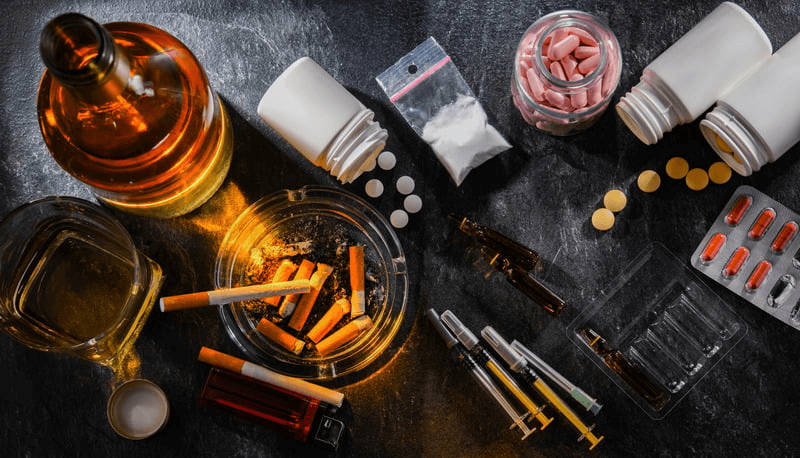
In honor of World Children's day - 20th Nov 2024 Introduction   Substance misuse or substance misuse disorder is exceptionally misunderstood, with often  people not recognising that they could potentially be misusing substances or become reliant  on them: this includes your medications. This piece briefly touches on awareness of excessive  use, to the point of addiction i.e., uncontrolled use. Substances can be misused by anyone and  although there are a variety of contributing factors towards misuse and addiction, there is no  specific gene for addiction, making it challenging to determine who can succumb to it.   A lot of people are unaware that any medications, despite it being prescribed can be misused,  if not used in line with guidance. This should not deter anyone from using their medications  but to simply be mindful of your medications, what are you using it for? And to be mindful of  the early signs of potential misuse?   Parental Substance Misuse   In the UK, there’s been a significant increase over the years, in parental substance misuse,  “The Health Survey for England and General Household Survey have suggested that 22–30%  of children live with a parent who binge drinks or drinks at a hazardous level and  approximately 8% live with a parent who misuses drugs (Duffy, Shaw, Woolfall, & Beynon,  2010; Manning, Best, Faulkner, & Titherington, 2009)”.   It’s also important to note, substance misuse disorder is a mental health condition, and also a  symptom to mental health conditions. What this means is that it generally commences as a  symptom to a mental health condition, where you start to self-medicate for a condition, and  can progress to substance disorder.   Signs of potential misuse include:   Are you building a tolerance?   Are you experiencing withdrawal symptoms when you don’t have the substance?   Do you spend a great deal of time thinking about the substance and how to obtain it?   Have you stopped doing enjoyable activities because of your substance use?    Have you stopped going to work?    What does your substance use pattern?    Are you unable to pay vital bills as a result of your use?    Are you experience psychological withdrawal symptoms without it?   ...
continue reading
Signs of Burnout
||
Burnout is described as a state of physical, emotional, and mental exhaustion caused by  prolonged stress, overwork, or a lack of fulfilment, often in the context of one's job or daily  responsibilities. Burnout is heavily associated with stress, as chronic stress can lead to a state  of burnout. Burnout for a lot of people presents predominantly as feelings:  overwhelmed,  disengaged, drained and/or mentally exhausted, which can lead to reduced productivity, lack  of motivation, and often low mood, which can impact your overall wellbeing.   Burnout generally has three main components:  i.Emotional exhaustion: Feeling drained and unable to cope with the pressure of your  day-to-day life. Usually, your head is too full to be able to take anything in, and  therefore you feel very mentally exhausted and struggle to engage fully in anything.   ii.Depersonalization: A sense of detachment or feeling negative about your day-to-day  life, you feel essentially numb, this is your body’s natural way of keeping you stable  but can work against you in terms of relatability. This can often lead to people having  less empathy or interests towards elements of their lives, which can often impact your  relationship with others.   iii.Reduced personal accomplishment: A feeling of incompetence or a lack of  achievement, often accompanied by doubts about one's ability to meet the  expectations or demands placed on them. This often occurs as a result of you knowing  you aren’t giving your all, but always remember, during this time, you are physically  incapable of giving it your all: in fact, you are giving it your all.   Burnout, if left untreated, can have serious long-term effects on both your mental and  physical health, and it's important to address it early. If you do reach a point of burnout, this  isn’t too concerning, you can still get support by contacting your GP, who will be able to offer  you a variety of treatment options such as: education on stress management, talking therapies,  lifestyle changes (like taking breaks or setting boundaries), and in some cases, changes in  work environment, relationships or job responsibilities.   It is always important to understand the early signs of burnout, as this will enable you to take  a step back, and ensure that you to, slow down, set boundaries for yourself and increase on  your self-care and relaxation routines, before you reach the point of burnout. Burnout can  take a long time to recover from, depending on how long it has built up, can take months to  years to manage, for more information on recovering from burnout,  Signs of Burnout - Insomnia or changes to sleep...
continue reading