

How music, relaxation and everyday rituals support holistic wellbeing
Author: Berta Kaguako
Relaxation is not a reward — it is part of wellbeing
Modern life can make it difficult to switch off. Work messages, household responsibilities, caring commitments and the constant pace of information can follow us from one part of the day into the next. Even after we finish working, our thoughts may still be occupied by deadlines and decisions. For people managing chronic illness, fatigue or pain, the demand to keep going can feel especially exhausting.
Relaxation is not the same as doing nothing. It means creating moments in which the mind and body have an opportunity to settle. These moments can be simple: making dinner to soft jazz, tidying a room with classical music playing quietly, sitting with a cup of tea or enjoying a few minutes without competing demands.
Our Unwind & Relaxation collection is designed for precisely these everyday moments — not only bedtime, meditation or structured exercise, but the quieter spaces in between.
Why it matters: a UK snapshot of stress
The Health and Safety Executive (HSE) estimated that 964,000 workers in Great Britain experienced work-related stress, depression or anxiety in 2024/25, with 22.1 million working days lost for those reasons [1]. These figures concern work-related ill health; they are not a measure of how many people simply feel stressed after work.
Among people reporting work-related ill health, stress, depression or anxiety accounted for 52%, compared with 27% for musculoskeletal disorders and 21% for other illnesses [2].
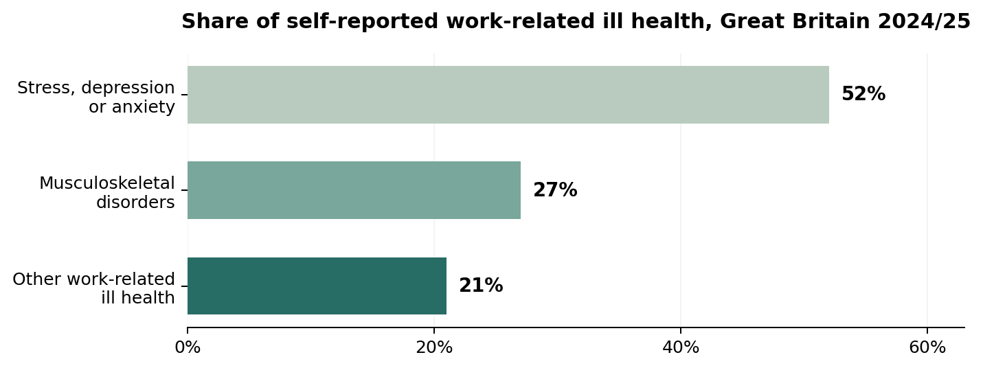
Figure 1. HSE estimates, Great Britain 2024/25. Percentages refer to the distribution of work-related ill-health cases, not the general population. Source: HSE [2].
An earlier UK-wide Mental Health Foundation survey (2018; 4,619 respondents) found that 74% had felt so stressed in the previous year that they felt overwhelmed or unable to cope [3]. This is a dated survey finding rather than a current population estimate, but it illustrates how widely stress can be experienced.
What happens when we begin to unwind?
1. We create space between demands and recovery
Stress is a normal response to challenge. It can sharpen attention in the short term, but remaining on high alert without opportunities to recover can be draining. A transition ritual — even a small one — can signal that a demanding part of the day is ending. The aim is not to eliminate stress altogether but to allow periods of relative calm.
2. We support emotional regulation
Music, familiar routines and a comfortable environment may help people shift attention away from persistent worries and reconnect with enjoyable experiences. Relaxation can make it easier to notice tension, respond more deliberately and avoid carrying the intensity of work into family or personal time.
3. We make everyday activities more restorative
Not everyone can set aside an uninterrupted hour for self-care. For some people, preparing a meal, folding laundry, watering plants or resting in a chair may be the most realistic opportunities to decompress. Gentle background music can help create a more welcoming atmosphere around these ordinary tasks.
4. We protect time for rest alongside chronic illness management
People living with chronic illness may need more frequent rest breaks, predictable routines and freedom to adapt plans to symptoms. Relaxation can support comfort and emotional wellbeing, but it is not a cure or a substitute for treatment. A person with sensory sensitivities, migraine, tinnitus or sound intolerance may prefer very low volume or silence instead.
Why music can be a useful relaxation companion
Music can influence mood, provide familiarity and shape the atmosphere of a room. What feels soothing, however, is highly personal. Soft jazz may help one listener settle while another prefers piano, orchestral music or silence. The most useful playlist is often the one you genuinely enjoy.
Research offers encouraging but nuanced findings. A systematic review of music interventions across 104 randomised controlled trials involving 9,617 participants reported improvements in psychological and physiological stress-related outcomes [4]. Yet a separate review of 14 experiments with 706 healthy participants found no clear overall advantage for music over control conditions in immediate stress recovery [5]. These studies investigated different kinds of music use and settings; their results should not be treated as proof that background playlists alone treat stress disorders.
For everyday wellbeing, the practical message is simple: music can be a pleasant, accessible tool to experiment with, rather than a guaranteed medical intervention.
Choosing the soundtrack for your moment
Soothing jazz
Soft jazz, mellow instrumentals and gentle rhythms can create a warm atmosphere while cooking, having dinner or slowing down after a demanding day. Choose tracks that feel unhurried rather than distracting.
Classical and piano music
Calm classical pieces and piano-led arrangements may suit reading, quiet household activities or moments of reflection. Familiarity and personal preference matter more than any particular composer or tempo.
Gentle background listening
Low-key instrumental music can help create continuity while you tidy, organise your home or enjoy a peaceful break. Keep the volume comfortable, especially if you are concentrating, fatigued or sensitive to sound.
The work-to-home transition: a simple four-step ritual
A deliberate transition can be particularly helpful when working from home, doing shift work, caring for others or finding it difficult to mentally leave work behind. Try this flexible routine:
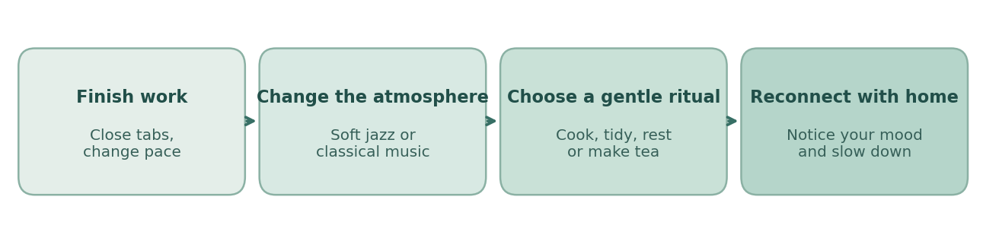
Figure 2. A suggested unwinding routine — an illustrative wellbeing practice, not a clinically validated treatment.
There is no required length. Five minutes may be more realistic than thirty, and people with fatigue or mobility limitations can practise the whole routine seated or lying down.
- Close the workday: finish one small task, note tomorrow’s priorities and silence non-essential notifications where possible.
- Change your surroundings: move to another room, adjust the lighting or put on a comforting jazz or classical selection.
- Choose an enjoyable, manageable activity: cook, clean gently, stretch if appropriate, sit down with tea or simply listen.
- Check in with yourself: notice whether you feel calmer, more comfortable or ready to reconnect with the rest of your evening.
Five everyday opportunities to practise unwinding
- After work: use a familiar piece of music as a boundary between work responsibilities and personal time.
- While cooking: create a gentle atmosphere and focus on one manageable task at a time.
- During light housework: make repetitive chores more enjoyable without turning them into a race.
- During rest breaks: sit comfortably, lower the volume and allow a moment without demands.
- On difficult health days: choose the smallest possible version — perhaps one track, comfortable positioning or quiet breathing.
Pair music with a brief NHS-supported breathing exercise
The NHS recommends a calming breathing exercise that can be practised sitting, standing or lying down. Breathe gently and comfortably, without forcing deep breaths, and allow the exhalation to flow naturally. The NHS suggests practising for at least five minutes when manageable [6]. If breathing exercises make you dizzy or uncomfortable, stop and seek appropriate advice.
NHS breathing exercises for stress: https://www.nhs.uk/mental-health/self-help/guides-tools-and-activities/breathing-exercises-for-stress/
The NHS also highlights present-moment awareness and social connection among its five steps to mental wellbeing [7]. Listening mindfully to a favourite piece of music can be one approachable way to pay attention to the present.
Explore our Unwind & Relaxation playlist
We have created an Unwind & Relaxation YouTube playlist featuring soothing jazz, classical music and other gentle background listening. It is intended for moments when you want to relax after work, cook, tidy, enjoy your home or simply have something peaceful playing in the background.
YouTube playlist: https://www.youtube.com/playlist?list=PLUZEYsVLUDlI
Unlike our Sleep & Relaxation collection, which is designed around bedtime, this playlist is for everyday unwinding and helping you move between the different parts of your day.
A compassionate approach to relaxation
Relaxation should never become another task you feel obliged to complete perfectly. There may be evenings when music feels comforting and others when quiet is preferable. If you live with chronic illness, disability or caring responsibilities, adapt the environment and the activity to your energy and sensory needs. A few gentle moments are worthwhile even when the rest of the day remains difficult.
Persistent anxiety, low mood or overwhelming stress deserve proper support. Speak with your GP or an appropriate healthcare professional if symptoms are affecting your daily life. Music and relaxation rituals can complement care, but should not replace it.
Final thoughts: let your home become a place to exhale
Wellbeing is shaped not only by major lifestyle changes but also by the small ways we move through ordinary days. A calming soundtrack, a pause between responsibilities and permission to rest can make space for enjoyment and connection. Whether you choose mellow jazz while cooking or classical music as you settle after work, unwinding is a meaningful part of a holistic wellbeing routine.
You do not need to earn rest. You can make room for it, one gentle moment at a time.
References and further reading
[1] Health and Safety Executive (2025). Health and safety at work: Summary statistics for Great Britain 2025. https://www.hse.gov.uk/statistics/assets/docs/hssh2425.pdf
[2] Health and Safety Executive. Work-related ill health and occupational disease in Great Britain, 2024/25. https://www.hse.gov.uk/statistics/causdis/overview.htm
[3] Mental Health Foundation. Stress: statistics (2018 YouGov survey). https://www.mentalhealth.org.uk/explore-mental-health/statistics/stress-statistics
[4] de Witte, M. et al. (2020). Effects of music interventions on stress-related outcomes: a systematic review and two meta-analyses. Health Psychology Review. https://pubmed.ncbi.nlm.nih.gov/31167611/
[5] Adiasto, K. et al. (2022). Music listening and stress recovery in healthy individuals: a systematic review with meta-analysis. PLOS ONE. https://doi.org/10.1371/journal.pone.0270031
[6] NHS. Breathing exercises for stress. https://www.nhs.uk/mental-health/self-help/guides-tools-and-activities/breathing-exercises-for-stress/
[7] NHS. Five steps to mental wellbeing. https://www.nhs.uk/mental-health/self-help/guides-tools-and-activities/five-steps-to-mental-wellbeing/
Disclaimer: Please note, all advice given is based on various healthcare models that have been proven to support patients with sustainability and backed by Public Health England (PHE). Nonetheless, you should run any changes to your routine by your GP as they are your primary healthcare provider and first point of contact. It is also important that any other healthcare professionals involved in your care is involved in any goal planning. Don’t forget they hold your medical records and are familiar with your health needs: this will help everyone be on the same page and will also enable you to plan more realistically and not overestimate your capacity, which could negatively affect your health.