
Building Strength, Stability and Confidence Through Gentle Movement
Author: Berta Kaguako
For many people, exercise is associated with stretching further, moving faster or pushing through discomfort. But when you live with hypermobility, chronic pain, fatigue or reduced mobility, that approach may not be helpful. Pilates offers a different starting point: controlled movement, comfortable range, breathing and gradual development of strength and body awareness.
Pilates is not a cure for chronic illness or joint hypermobility. It can, however, be one practical component of a personalised holistic wellbeing plan, alongside appropriate healthcare, rest, pacing, sleep and emotional support.
What Is Pilates?
Pilates is a system of exercises that emphasises movement quality, alignment, breathing, control and coordination. Sessions can be performed on a mat, in a chair, standing or using specialist equipment. Many exercises are adaptable, although not every routine is appropriate for every person.
Rather than asking how far a joint can move, a well-adapted Pilates session often asks how comfortably and reliably the body can control that movement. This can be especially relevant for people who feel unstable or uncomfortable at the extremes of their joint range.
Why Pilates May Appeal to People With Hypermobility
Joint hypermobility means that some joints move beyond the range typical for most people. Some individuals have no symptoms; others experience pain, recurrent sprains, fatigue, instability or difficulties with proprioception (the sense of where the body is in space). Symptomatic hypermobility may occur in hypermobility spectrum disorders or hypermobile Ehlers–Danlos syndrome.
NHS guidance on joint hypermobility recommends improving muscle strength and fitness to help protect joints. Physiotherapy may also be useful. For some people, suitably modified Pilates can provide a structured way to practice gentle strengthening, balance and movement control. It is not universally preferable to yoga: the best choice depends on symptoms, the exercises involved and the quality of adaptations.
Principles that matter for hypermobile joints
- Work within a comfortable, controlled range rather than seeking maximum flexibility.
- Build strength and endurance gradually, with rest between sessions when needed.
- Avoid locking or hanging on the end range of elbows, knees or other joints.
- Prioritise stable positions and clear instructions; seek physiotherapy input if joints repeatedly give way.
- Stop or modify activities that provoke pain, instability or a delayed worsening of symptoms.
Pilates and Yoga: Two Different Routes to Gentle Movement
Yoga and Pilates overlap in their use of breathing, body awareness and controlled movement. Yoga practices vary widely and may place more emphasis on postures, stretching or meditation; Pilates often places more emphasis on muscular control and progressive strength. Neither is inherently safer in every case. People with hypermobility may prefer stability-focused Pilates, while others benefit from carefully adapted yoga.
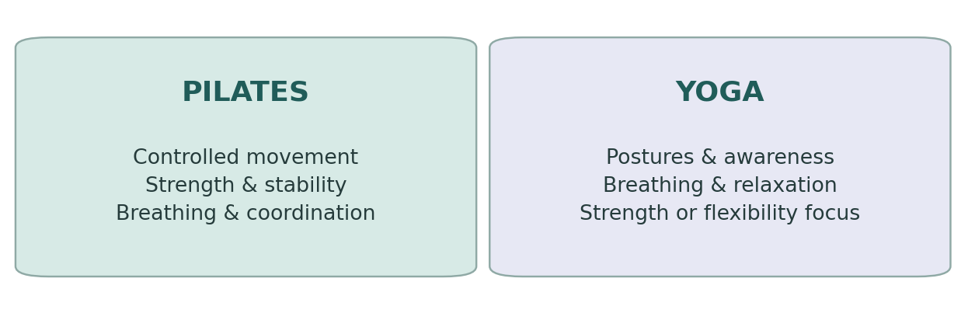
Figure 1. General tendencies only: individual Pilates and yoga classes vary considerably.
How Gentle Pilates Can Support Everyday Wellbeing
1. Muscle strength and joint support
Muscles help support joints during daily activities. Appropriate resistance and control exercises can improve muscular capacity over time, potentially making tasks such as standing, reaching and changing position more manageable. Progress should be gradual and individualised.
2. Balance, coordination and body awareness
Slow, deliberate movement gives people an opportunity to notice posture, weight distribution and joint position. These skills may be particularly useful when proprioception or confidence in movement is affected.
3. Comfort, function and confidence
For people living with persistent pain, a manageable movement routine may support physical function and confidence. Research on Pilates for chronic non-specific low back pain suggests it can improve pain and disability compared with minimal intervention, although it is not consistently superior to other exercise approaches. Results should not be generalised to every chronic condition.
4. Breathing and emotional wellbeing
Coordinating movement with comfortable breathing can provide a mindful pause in the day. Some people find this calming and enjoyable. It should complement, not replace, treatment for anxiety, depression or other health conditions.
UK Guidance: How Much Activity Is Recommended?
The UK Chief Medical Officers advise most adults to aim for at least 150 minutes of moderate-intensity activity per week, or 75 minutes of vigorous activity, alongside muscle-strengthening activities on at least two days. For disabled adults, the guidance emphasises that some activity is better than none and that activity should be appropriate to the individual. These targets are population-level guidance, not a requirement to push through illness.
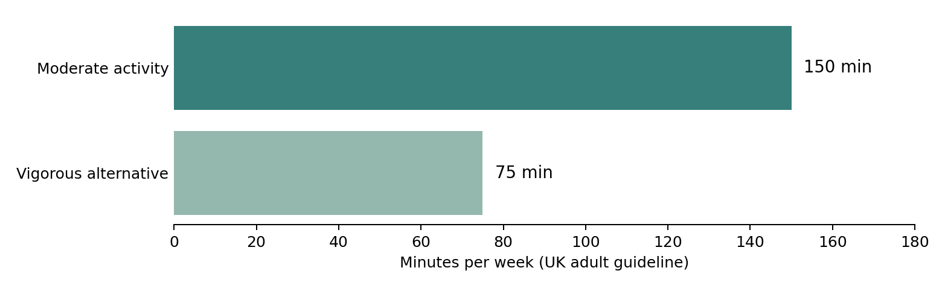
Figure 2. UK adult aerobic activity recommendations. In addition: strengthening activity on at least 2 days weekly. Source: UK Chief Medical Officers (2019).
These are not Pilates-specific targets. A gentle Pilates session may count towards strengthening or mobility work, but it will not necessarily provide moderate-intensity aerobic activity. If you have chronic illness, a clinician or physiotherapist can help tailor an appropriate plan.
Living With Chronic Illness: Personalise the Practice
There is no universal routine for arthritis, fibromyalgia, hypermobility, neurological conditions or chronic fatigue. A person who can comfortably complete a short seated session may need different exercises from someone able to practise on a mat. Some conditions also fluctuate from day to day.
People with ME/CFS or Long COVID who experience post-exertional malaise should not follow programmes that automatically increase activity regardless of symptoms. NICE guidance for ME/CFS advises against fixed incremental exercise programmes and recommends individual energy management. Discuss new exercise with an appropriate healthcare professional when symptoms are significant or unpredictable.
A Gentle Way to Begin
- Choose a suitable position: mat, chair or supported standing.
- Start with a few controlled movements rather than a long session.
- Move slowly and avoid breath-holding or forcing a stretch.
- Take breaks and assess how you feel afterwards, including the following day.
- Seek tailored advice if you experience frequent dislocations, severe pain, dizziness or major fatigue.
Explore Our Pilates & Gentle Movement Playlist
We have created a dedicated Pilates & Gentle Movement YouTube playlist for people who prefer Pilates to yoga, including those who may benefit from a greater focus on control and stability. Explore the videos at your own pace, select movements appropriate for your circumstances and use professional guidance where needed.
If you are unsure whether Pilates or yoga suits you best, our other playlists include Chair Yoga for Beginners, Beginners’ Yoga and Supine Yoga. The right option is the one that can be adapted safely to your needs.
Pilates as Part of a Holistic Health Package
Holistic wellbeing is not about finding a single exercise that solves everything. It is about combining appropriate movement with medical care, restorative sleep, nutrition, emotional support and relaxation. A short, manageable Pilates session can be one small part of that wider picture, helping people reconnect with movement without pressure to perform.
Final Thoughts: Strength Without Strain
Pilates does not require perfect posture, exceptional flexibility or an advanced level of fitness. Its potential value lies in thoughtful, controlled and adaptable movement. For people with hypermobility or chronic illness, the aim should be to build confidence and function without provoking symptoms. Small, sustainable steps are worth celebrating.
References and Further Reading Guide
- NHS. Joint hypermobility syndrome. https://www.nhs.uk/conditions/joint-hypermobility-syndrome/
- UK Department of Health and Social Care (2019). UK Chief Medical Officers’ Physical Activity Guidelines. https://www.gov.uk/government/publications/physical-activity-guidelines-uk-chief-medical-officers-report
- UK Department of Health and Social Care. Physical activity guidelines: disabled adults. https://www.gov.uk/government/publications/physical-activity-guidelines-disabled-adults
- NICE (2021). Myalgic encephalomyelitis (or encephalopathy)/chronic fatigue syndrome: diagnosis and management (NG206). https://www.nice.org.uk/guidance/ng206
- Yamato TP et al. (2015). Pilates for low back pain. Cochrane Database of Systematic Reviews, CD010265. https://doi.org/10.1002/14651858.CD010265.pub2
- NHS. Physical activity guidelines for adults aged 19 to 64. https://www.nhs.uk/live-well/exercise/physical-activity-guidelines-for-adults-aged-19-to-64/
Disclaimer: Please note, all advice given is based on various healthcare models that have been proven to support patients with sustainability and backed by Public Health England (PHE). Nonetheless, you should run any changes to your routine by your GP as they are your primary healthcare provider and first point of contact. It is also important that any other healthcare professionals involved in your care is involved in any goal planning. Don’t forget they hold your medical records and are familiar with your health needs: this will help everyone be on the same page and will also enable you to plan more realistically and not overestimate your capacity, which could negatively affect your health.